The Nordics are one of the most digital ecommerce regions in the world, and one of the easiest to get wrong. Delivery here does not mean a courier ringing the doorbell. It means parcel lockers, agent pickup points, and carrier apps, run by regional networks most global platforms treat as an afterthought.
This guide covers how shipping and returns actually work across Sweden, Norway, Denmark, and Finland, and what a brand entering the region needs in place.
Short answer: Nordic ecommerce runs on a distinct carrier and delivery mix: PostNord across the region, Bring in Norway, and locker and evening-delivery networks such as Instabox and Budbee under Instabee. Two things follow for brands selling there. Delivery choice at checkout genuinely affects conversion, and locker collection deadlines are a real source of returns when customers miss them.
Free for DTC brands: Pango runs the shipping and returns audit on your own order and carrier data as part of a demo: fifteen numbers across checkout, carriers, warehouse handover, tracking and returns, the three that matter most for your operation, and the same orders shown running on one system. Book the free audit.
The carrier landscape
Four names carry most Nordic ecommerce parcels:
- PostNord. The Swedish-Danish postal group and the region's default carrier, spanning home delivery, agent pickup, and lockers. Its status feed is famously granular, which is why we wrote a separate guide to PostNord tracking statuses.
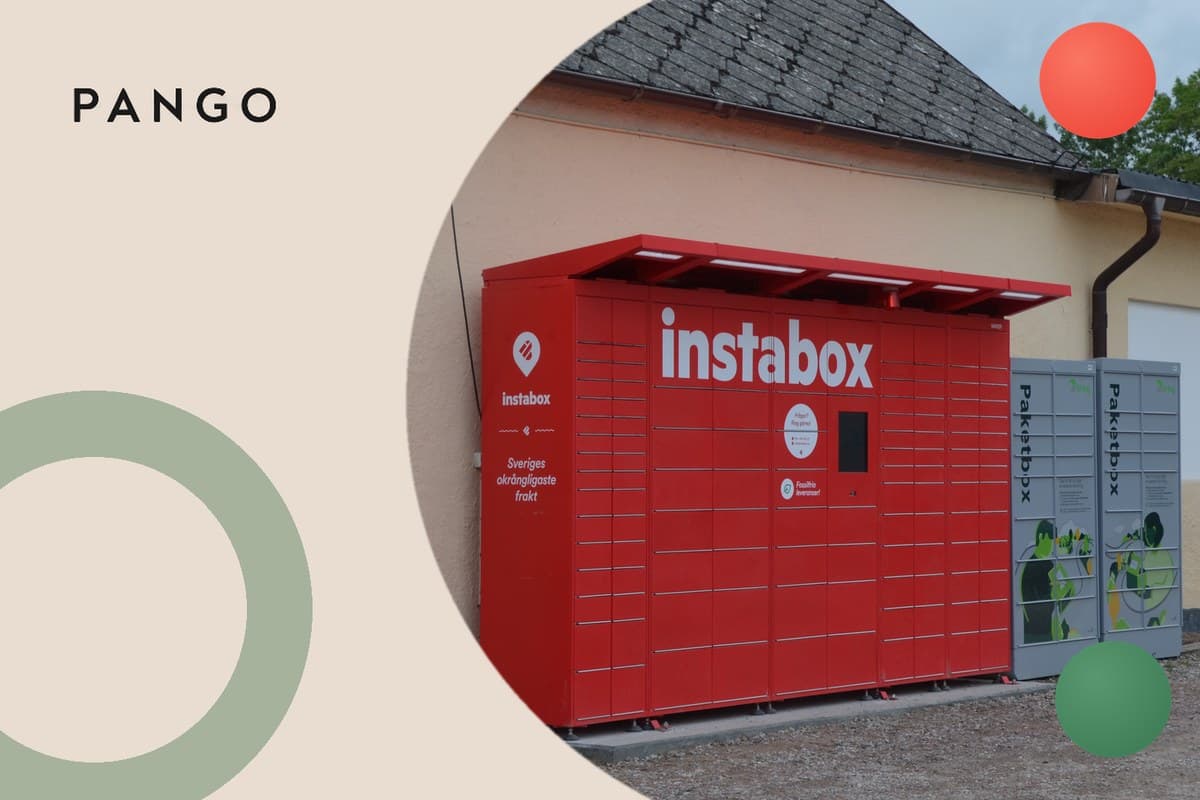
- Instabee (Budbee and Instabox). The locker-and-home-delivery challenger loved by urban shoppers, with evening home delivery and app-first tracking. Covered in depth in our Instabee and Budbee tracking guide.
- Bring. The Norwegian Posten group's logistics arm, strong in Norway and cross-Nordic lanes.
- DHL, GLS, UPS. Present everywhere, typically for cross-border legs and B2B, less so for domestic last-mile.
The practical consequence: a serious Nordic setup is multi-carrier from day one. No single network wins every country, every price point, and every delivery mode at once.
Delivery expectations, by habit
- Pickup is normal. A large share of Nordic parcels end at a locker or an agent point in a grocery store. Shoppers choose the point at checkout and expect that choice to be offered.
- The checkout promise matters. Nordic shoppers compare delivery options like prices: locker vs home, tomorrow vs Thursday. Showing real options with real dates, a proper delivery promise, directly moves conversion.
- Tracking is app-native. Customers live in carrier apps. Your own branded tracking page has to be at least as accurate as the carrier's, or it will be ignored.
- Sustainability is a selection criterion. Fossil-free last-mile options and consolidated locker delivery are marketed hard by the carriers and noticed by shoppers.
How returns work in the region
The Nordics sit under EU-style consumer rules: a statutory right of withdrawal for online purchases, so returns are not optional. The regional habits on top of it:
- Drop-off returns. Customers expect to return through the same locker and agent networks they collect from, label-free where possible, with a QR code from the returns portal.
- Exchange-first pays. Nordic basket values and category mix (fashion especially) make exchange steering worth real money. Keeping 19% of returns as exchanges or store credit, as Switch Nails does on Pango, is revenue the refund-default flow gives away.
- Refund speed is reputation. Slow refunds are the top complaint in Nordic ecommerce reviews. Automating the refund trigger from the return scan, rather than the warehouse queue, removes the lag.
The statutory rules behind those habits, the 14-day withdrawal right in Sweden, Norway, Denmark and Finland, who pays the return, the exceptions and the one-year extension when a store fails to inform, are set out country by country in Nordic e-commerce returns law.
What a Nordic-ready stack needs
- Connectors for the regional carriers, not just the global three. Carrier integration quality decides everything downstream.
- Checkout that shows lockers, agents, and home options with honest dates.
- Status normalization across feeds that differ wildly, in local languages.
- A returns flow that runs through the same pickup networks, exchange-first.
- Routing rules that pick the carrier per parcel: rate shopping across PostNord, Instabee, and Bring instead of one contract for everything.
That is the setup Pango ships with: Nordic carriers prebuilt among its 100+ connectors, delivery promises at checkout, normalized tracking, and exchange-first returns, run by AI agents on one record of the order. Pango is Nordic-born, so the region is the home market, not an expansion pack.
Nordic brands shortlisting the local incumbent alongside Pango will find the direct comparison in Pango vs Ingrid.
What Pango specifically connects to and handles in the region, carrier by carrier and country by country, is in Pango for Nordic brands.
The same guide for Italy, where the carriers' tracking is in Italian and the pickup networks are the delivery option shoppers expect, is shipping to Italy for ecommerce brands.
The UK version of this guide is shipping to the UK for ecommerce brands.
The bottom line
Nordic ecommerce runs on regional carriers, locker networks, checkout-level delivery choices, and fast, self-serve returns. Get the carrier layer right and the rest follows. See the post-purchase operations platform and book a demo.