"Delivered to local carrier" is the status that gets searched in five languages for one reason: the word "delivered" is in it and the parcel is not at your door. This page explains what the status records, which carrier usually has the parcel after it on the common lanes out of China, how long until that carrier's first scan where anything is published, what to do, and the one-line meaning in French, German, Italian and Spanish with the glossaries for each. Its sibling page, handed over to local carrier meaning, covers the wording variants on SHEIN, Cainiao, AliExpress, Temu and 4PX and why the tracking goes quiet; this page is about who has the parcel now.
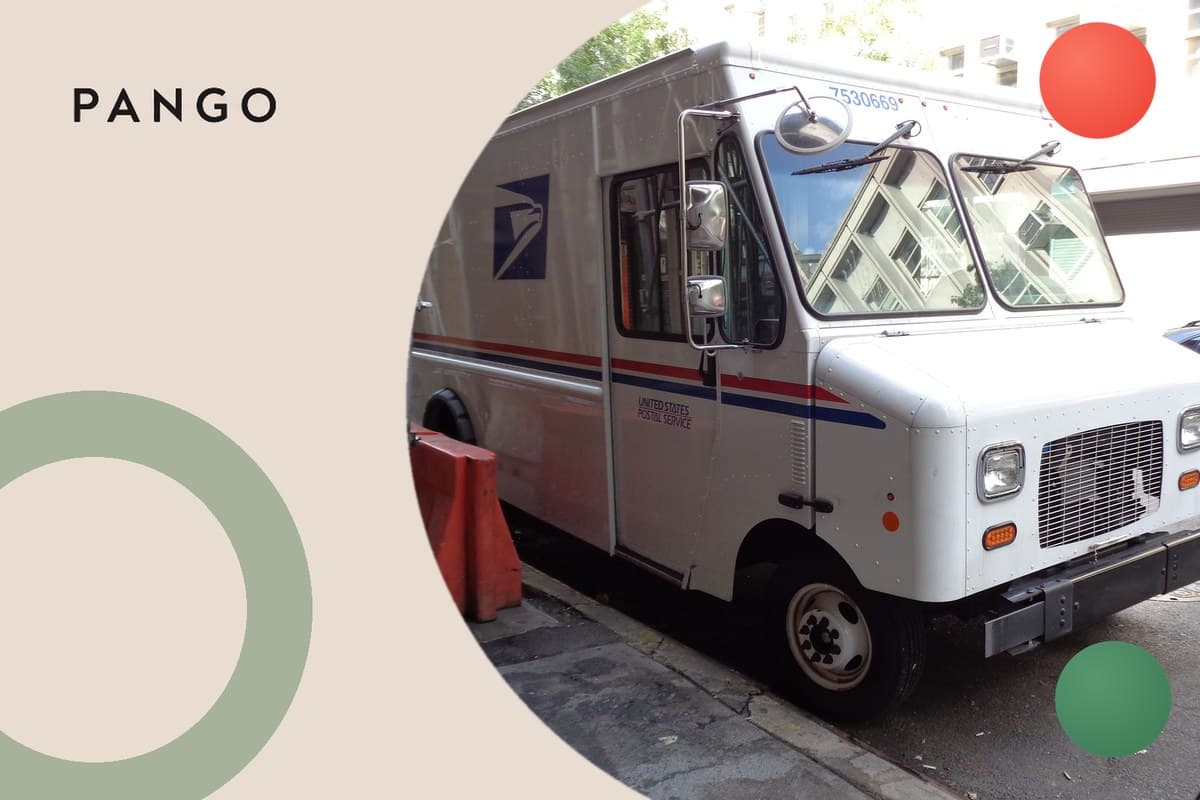
Short answer: "Delivered to local carrier" means the international network that carried your parcel out of the origin country has handed it to the delivery carrier in your country, which will bring it to your door or a pickup point. It is a handover between two companies, not a delivery to you; the status that means the parcel is at your door is "delivered" on its own, on the local carrier's own tracking. Which carrier takes over depends on the lane: on parcels from Chinese marketplaces carried by 4PX, Cainiao or Yanwen, the local carrier is usually the national post or a large parcel carrier in your country, USPS in the United States, Royal Mail or Evri in the UK, Canada Post in Canada, PostNL in the Netherlands, Correos in Spain, Poste Italiane in Italy, DHL in Germany, often under a new tracking number. No carrier publishes a time from the handover to its first scan; the practical reading is one to three days, and AliExpress itself warns that courier websites can lag by days.
What the status records
Cross-border parcels are carried by more than one company: the retailer's logistics provider takes the parcel out of the origin country, an airline or linehaul operator moves it, and a different company delivers it at the far end. "Delivered to local carrier" is the scan that records the last of those handovers. It is written by the origin network (4PX, Cainiao, Yanwen or the marketplace's own feed), not by the carrier that now has the parcel, which is why it is usually the last line that network writes: from here the events belong to the local carrier and are written under its own number. The distinction between the networks' sorting centres and the local carrier's depots, and why a parcel can seem to start its journey again after the handover, is in sorting center meaning.
Which carrier has your parcel now, by lane
The origin networks' own pages describe the model without naming partners per country: AliExpress describes its Standard Shipping as "final-mile delivery handled locally using partnered national post services", 4PX's shipments are described as "handed over to a logistics partner who will complete the international delivery", and Temu says orders "may be handed over to local carriers for the final leg of delivery, tracking may not be available every step of the way." The carrier that takes over is therefore read from the tracking itself: the handover line, the new tracking number and the carrier whose tracker recognises it. On the common lanes:
| Destination | The local carrier after the handover, usually | Where to track, and the status vocabulary |
|---|---|---|
| United States | USPS | USPS tracking statuses |
| United Kingdom | Royal Mail or Evri | Royal Mail tracking statuses, Evri tracking statuses |
| Canada | Canada Post | Canada Post tracking statuses; the 4PX lane in 4PX tracking in Canada |
| Netherlands | PostNL | PostNL tracking statuses |
| Spain | Correos | Correos tracking statuses |
| Italy | Poste Italiane | Poste Italiane tracking statuses |
| Germany | DHL | DHL tracking statuses |
"Usually" is the honest word: the origin networks use more than one partner in most countries, and the tracking page is the only reliable statement of which one has your parcel. The origin networks themselves are described in 4PX tracking statuses and Cainiao tracking statuses.
How long until the first local scan
No carrier publishes a time from the handover to its first scan, so none is stated here as a carrier's. Two things are published. AliExpress's tracking guide says that "courier websites often lag in updating tracking information. For example, China Post may take 3–5 days to reflect a shipment's status." And the mechanics are plain: the local carrier's first scan happens when the parcel is processed at its depot, which can be a day or two after the handover, especially for postal operators that receive consolidated bags, and its events are written under its own number, which the marketplace app shows only if it has mapped the two. The practical reading from the sibling page is to give the first local scan two business days, with a handover on a Friday often producing its first domestic scan on the Monday or Tuesday, and to escalate through the seller after a week without movement on either number.
What to do
- Find the local tracking number. SHEIN and Temu show the last-mile carrier and its number on the order page once assigned; AliExpress Standard Shipping orders can be followed on Cainiao's own site for the full chain of scans.
- Track on the local carrier's site. It is authoritative for the delivery day and any attempt; use the hub for your country above to read its statuses.
- Check the address and phone number on the order. This is the moment a carrier in your country will use them, and the last moment to correct them through the seller.
- Give the first local scan two business days. Silence here is the handover gap, not a loss.
- After a week with no movement on either number, contact the seller through the marketplace with both numbers; the seller is the carrier's customer and can open a trace.
- "Delivered" with nothing received: check the safe place, neighbours and the pickup point the same day; the checklist is in package says delivered but not received.
The meaning in French, German, Italian and Spanish
- French: "remis au transporteur local" or "remis au transporteur du dernier kilomètre"; the full page in French is delivered to local carrier traduction, and every English status in French is in statuts de suivi en anglais.
- German: "an den lokalen Zusteller übergeben"; every English status in German is in Sendungsstatus auf Englisch.
- Italian: "consegnato al corriere locale" or "consegnato al corriere dell'ultimo miglio"; the full page in Italian is delivered to local carrier traduzione, and every status in Italian is in stati di tracciamento in inglese.
- Spanish: "entregado al transportista local" or "entregado al transportista de última milla"; the full page in Spanish is delivered to local carrier traducción, and every status in Spanish is in estados de seguimiento en inglés.
For merchants
"Delivered to local carrier" is the point where a cross-border parcel changes hands and the customer loses the thread: the origin network's feed goes quiet, the local carrier's feed has not started, the tracking number changes, and the word "delivered" makes the shopper think the parcel is lost or stolen. For a brand shipping on these networks, the fix is to show one record that carries the linehaul and the last-mile tracking together, name the local carrier the moment the handover scan arrives, and send a message in the customer's language that says what the status means and when the next scan is expected. Pango normalises the statuses of every connected carrier into one milestone set, stitches the international and the last-mile numbers on one order record, and sends the handover and delay messages automatically. If this status is generating tickets, the options to compare are in carrier management software.
The bottom line
"Delivered to local carrier" means handed over, not delivered. The carrier that now has the parcel is the one your country's tracking recognises, the first local scan normally comes within two business days, and the seller is the one to ask after a quiet week. Read the local carrier's statuses on its own hub, and read the word "delivered" on its own before you worry.