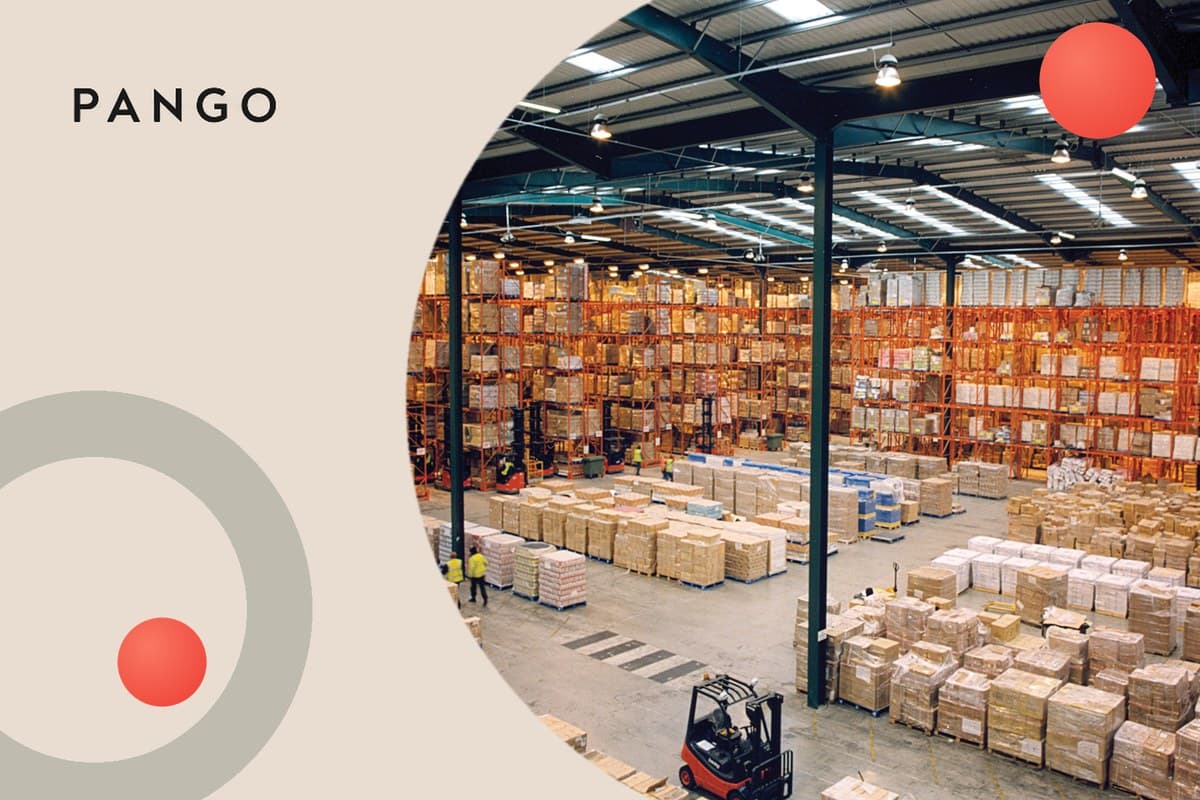
A third-party logistics provider takes over the physical half of a DTC brand's operation: receiving stock, storing it, picking and packing orders, handing parcels to carriers, and taking returns back in. Choosing one is a decision about cost, but also about control, because from the day the stock moves, every promise the brand makes to a customer is kept or broken inside a building the brand does not run.
This guide is for the founder or operations lead making that choice for the first time, or remaking it after a bad year. It covers how 3PLs charge, what to ask before signing, what the 3PL's own software means for your stack, and how to keep delivery, tracking and returns in your hands when fulfilment is in someone else's. The definitions are in what is a 3PL.
Short answer: Every 3PL charges along the same four lines, and the quotes differ in the rates and the minimums, not the structure. ShipBob's pricing page lists its standard fees as "Implementation, Receiving your inventory, Warehousing your products, Picking, packing, and shipping each order"; ShipMonk's lists "Storage", "Fulfillment fees" that "adjust to your order volume, covering essentials like pick-and-pack, receiving, and returns", "Special projects" and "Shipping", plus a "Monthly Minimum" calculated "by multiplying your monthly order volume by your first item pick fee and then reducing it by 20%". Model the total cost per order at your real volume including the minimum, then choose on fit: locations near your customers, carrier options on the lanes you ship, returns receiving, and an integration that sends the 3PL's scans (received, picked, packed, shipped, returned) to the systems you keep, so that your delivery promise, tracking and returns run on real events rather than on the 3PL's portal.
The four fee lines
Receiving. The charge for taking your inbound stock into the building, usually per pallet, carton or hour. ShipBob lists "Receiving your inventory" among its standard fees; ShipMonk counts receiving inside its fulfilment fees.
Storage. Per pallet, shelf or bin, per month. ShipMonk describes it as "Your products are stored efficiently based on size, sales, and quantity. Each SKU is separated for precise tracking and complete accountability." Slow-moving SKUs are where this line grows quietly.
Pick, pack and ship. Per order and per additional item, plus packaging, plus the carrier rate. ShipMonk notes "additional charges for fragile wrapping based on the product's dimensions"; ShipBob lists "Picking, packing, and shipping each order" as one line. Ask for the first-item and additional-item pick fees separately, because the ratio between them decides how multi-item orders are priced.
Everything else. Implementation (ShipBob lists it as a standard fee), returns processing, kitting, labelling, inventory counts, which ShipMonk groups as "Special projects: Need extra help? From labeling to inventory counts, we handle tasks beyond daily fulfillment".
Both providers quote rather than publish rates: ShipBob's page ends in "Request Fulfillment Pricing" and ShipMonk's in "Get a Quote". So the structure is public and the numbers are yours to negotiate.
The monthly-minimum trap
ShipMonk explains its minimum plainly: "The Monthly Minimum is a standardized fee that is determined in conjunction with your pick fees and projected order volume", calculated "by multiplying your monthly order volume by your first item pick fee and then reducing it by 20%". Read that as a floor: in a month when volume drops below the projection, you pay the floor anyway. For a seasonal brand, the minimum in February can be the largest line on the invoice. Model the quiet months, not the average.
Nine questions before you sign
- Where are the warehouses, and where are your customers? A single building on the wrong coast adds a day and a zone to every parcel. ShipBob's page quotes a customer that "expanding from 2 to 4 warehouses" changed its economics; ask what multi-location placement costs and who decides the split.
- Which carriers and services can ship from each building, and on whose account? The 3PL's negotiated rates can be better than yours; they can also lock you into one carrier per lane. Ask whether your own carrier accounts can be used.
- What is the cut-off for same-day dispatch, and what is the measured hit rate? The warehouse handover time is the number that decides whether your delivery promise is true.
- How are returns received, graded and restocked, and how fast? A return that sits ungraded for two weeks is a refund delayed and a sale lost in the January window.
- What does the 3PL's WMS expose to you? Real-time inventory, order status and scan events through an API or an integration, or a portal you log into. ShipBob notes its WMS "is available for merchants with US-based warehouse(s)"; many European 3PLs run on a shared platform such as Ongoing WMS, which describes itself as serving "both third-party logistics (3PL) providers as well as businesses that run their own warehouses".
- What is the accuracy and damage rate, and what is the remedy? Ask for the number and the credit policy in writing.
- What happens at peak? Receiving lead times, staffing, and whether cut-offs move in November and December.
- What are the exit terms? Notice period, inventory transfer fees, and who owns the data on the orders shipped.
- What is the total cost per order at your volume, including the minimum, storage and packaging? The only number that compares two quotes.
What to connect the 3PL to
The mistake that turns a good 3PL into a bad experience is running the customer-facing operation from the 3PL's portal. The portal shows the brand what the warehouse did; it does not show the customer a delivery date at checkout, does not send the notification when the parcel is late, and does not decide whether a return becomes an exchange. Those decisions belong to the brand, and they need the 3PL's events (received, picked, packed, shipped, return received) flowing into the systems that make them.
The setup that works: the brand's own delivery, tracking and returns layer connected to the 3PL's WMS and to the carriers, so that the delivery promise at checkout uses the 3PL's real cut-offs and handover times, the tracking page shows the customer the brand's words over the carrier's scans, and the return scan at the 3PL triggers the refund or the exchange. The checks that expose a broken handover are in the shipping and returns audit, and the warehouse-side software in pick and pack software.
Where Pango fits
Pango runs the brand's delivery, tracking and returns whether fulfilment is in the brand's own warehouse or at a 3PL. Carrier routing and labels work from either building; pick and pack runs on the same order record at either; the tracking page and notifications carry the brand's name whoever packed the box; and the return scan is an operational trigger for the refund and the restock. Ongoing WMS is listed on Pango's integrations page, and Pango's analytics measure warehouse handover time and carrier performance per lane, which a live customer has used as a third-party record to renegotiate carrier terms. The metrics to hold a 3PL to are in carrier performance metrics.
The bottom line
Choose a 3PL on total cost per order at your real volume, on buildings near your customers, on measured handover and accuracy, and on whether its events can flow into the systems you keep. Then keep the customer-facing operation, the delivery promise, the tracking and the returns, in your own hands. To see that layer running on top of a 3PL, on your own orders, book a demo.